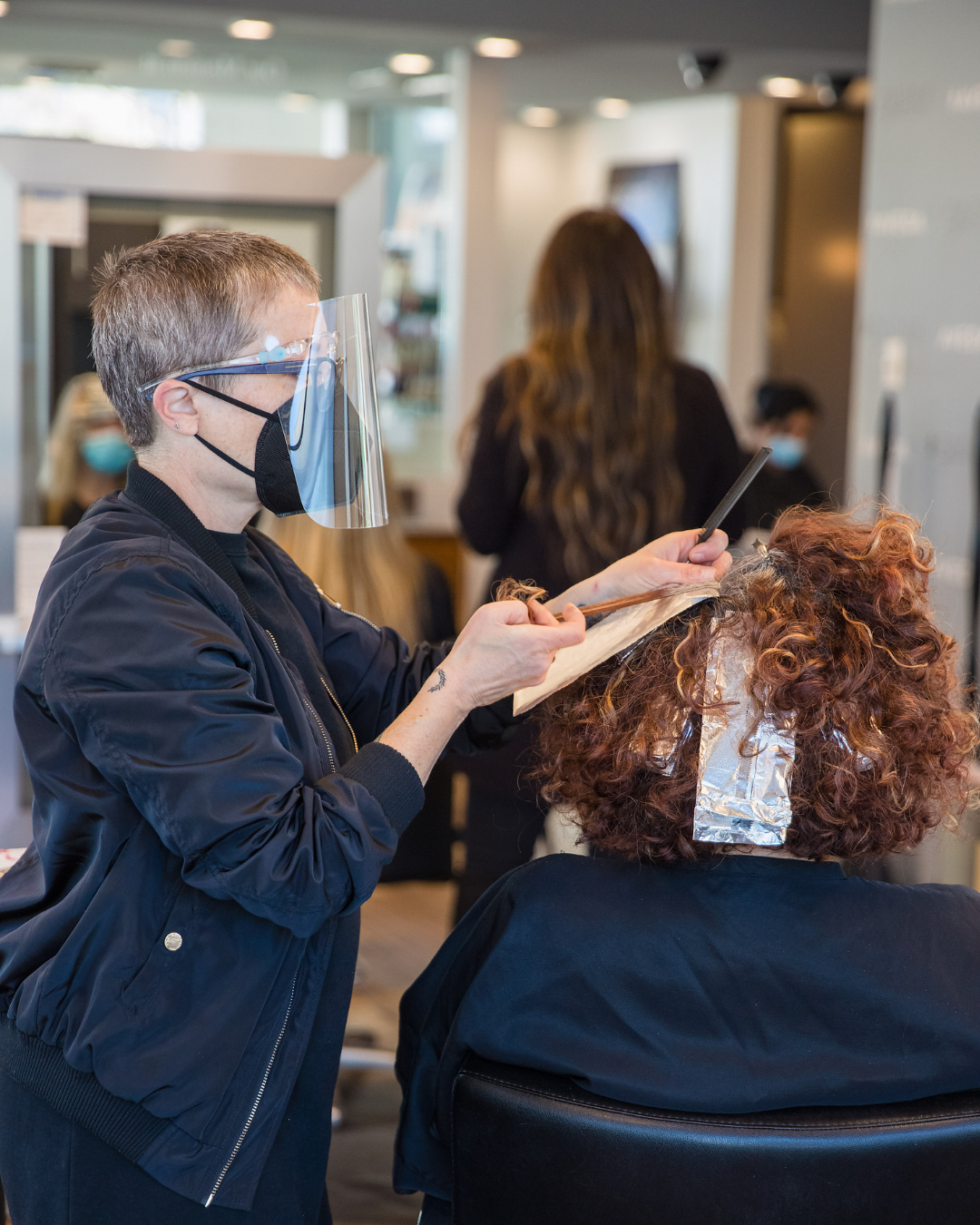
Noticing silver strands around your part, temples, or crown brings up a practical choice: do you want complete gray coverage that matches your established base shade, or dimensional gray blending that integrates silver strands into highlights and softer contrast so regrowth is less noticeable between visits?
Cover photo: foil & root color service by Hair Spies (hairspies.com) via Wikimedia Commons (CC BY 2.0).
Short answer: opaque root coverage versus dimensional camouflage
Choose traditional gray coverage (Root Touch-Up or All-Over Color) when you love a rich, uniform brunette, auburn, or dark-blonde base and want silver regrowth covered consistently at the root. Choose gray blending (Highlights, Partial Highlights, or a Color + Highlight Combo) when you prefer multi-tonal dimension that breaks up the line of demarcation as new growth comes in, or when you are transitioning away from solid dark dye toward a lighter, lower-contrast schedule.
When a Root Touch-Up or All-Over Color is the right fit
A Root Touch-Up ($115+, about 1½ hours) applies single-process color specifically to new regrowth to maintain your established shade. It is one of the most popular repeat services for clients who want dependable coverage along the part and hairline without over-processing the rest of their lengths.
- Root Touch-Up ($115+): Ideal when your mid-lengths and ends still hold their color well and you only need the new growth covered.
- All-Over Color ($140+, about 2 hours): Useful when both the roots and the full length need a single-process solid refresh (does not include bleach or foil highlights).
- Root Touch-Up + Haircut Combo (2 hours): Reserves time for both your root coverage and a full shampoo, precision haircut, and blowout in one visit.
How highlights and dimensional color soften the grow-out line
Solid dark color next to bright white or silver regrowth creates high visual contrast after a few weeks. Adding Partial Highlights ($175+) or Full Highlights ($210+)—or booking a Color + Partial Highlight combination—introduces lighter ribbons next to your natural silver strands so new growth blends into the overall pattern rather than forming a sharp horizontal line.
Where your silver grows matters just as much as the percentage of gray. Many people develop concentrated silver around the temples and front hairline ("money-piece" zones) long before the back of the head turns gray. Strategic foil placement around the face and part can work with those naturally lighter areas. If you have years of dark box dye or permanent color on your lengths and want to transition to natural silver or lighter gray blending, that is a multi-step process best planned as a Color Change or Color Correction consultation first.
Why gray hair behaves differently—and how to care for it
Clients often notice that silver strands feel wirier, drier, or more resistant to color than pigmented hair. Dermatology resources from the Cleveland Clinic and the American Academy of Dermatology (AAD) explain that as hair follicles produce less melanin, changes in sebum production and cuticle structure can make unpigmented hair feel coarser and more sensitive to UV yellowing and heat styling.
- Color-safe moisture & UV habits: Gentle sulfate-free or color-safe cleansing, conditioning focused on dry lengths, and wearing a hat on high-UV San Diego beach days (see our Sun, UV & Color-Treated Hair guide) help keep both covered and blended gray looking fresh.
- At-home dye precautions: Layering opaque home box dye repeatedly from root to tip can build up dark, uneven bands that are difficult to lift later. If you ever use retail hair color at home, always follow FDA hair-dye safety and patch-test guidelines.
What to send Kim before booking your gray-color appointment
Not sure whether to book a Root Touch-Up, Partial Highlight, or Color + Partial Highlight combination? Contact Kim or text (310) 408-8950 with:
- A photo of your roots and part in natural daylight, plus a photo showing your full hair length.
- What is currently on your hair (salon root color, highlights, henna, or at-home dye) and when it was last colored.
- Whether you prefer 100% opaque coverage at the root or a softer, multi-tonal blend with longer stretches between appointments.
Review all color and combination options on the Services & Prices page.