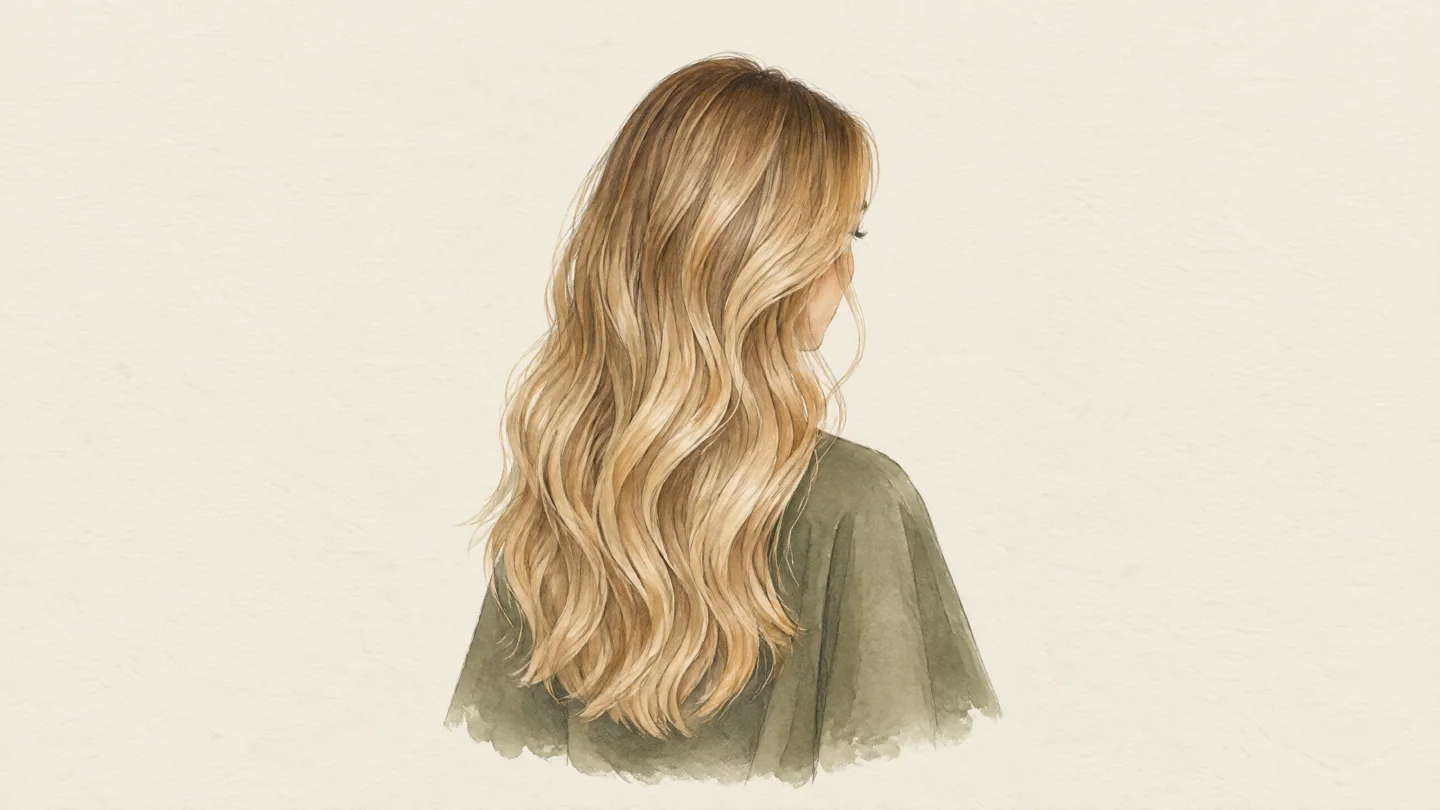
Honey blonde is a warm, golden take on blonde that can feel soft and natural or brighter and more noticeable. It is a useful starting point for a conversation, not a single shade or a ready-made formula. The most helpful question is not simply, “Can I go honey blonde?” It is, “What kind of warmth, brightness and contrast do I want on my hair?”
Whether you are starting with natural brown hair, grown-out highlights or a color history that has built up over time, planning matters. A clear conversation before the appointment helps turn an inspiration photo into a color direction that makes sense for your hair and routine.
Describe the shade you want, not just its name
One person’s honey blonde is a golden brunette with a few light pieces; another’s is a much lighter blonde with warmth throughout. Bring a photo if you have one, then explain what catches your eye. Is it the golden tone, the brightness around the face, the softer root, or the overall lightness?
It also helps to name what you would rather avoid. You may want warmth without looking very yellow, a blended look rather than bold stripes, or a color that still feels close to your natural depth. These details give the conversation more direction than the shade name alone.
Use photos as a reference, not a promise
Photos show a useful mood and placement idea, but they do not show the starting color, lighting, filters or color history behind the result. Save a few images that feel close to your goal, including at least one that shows the amount of contrast you like. Then compare them with your current hair so the plan can be tailored to the change you want.
Your current color and history come first
Before lightening, a color consultation needs a picture of where your hair is now. Natural base color, previous color, existing highlights and the overall condition of the hair all shape the approach. Hair history and condition are part of planning a result that makes sense for your starting point.
Be ready to share the color you have used over the last several years, whether it was done at home or in a salon, and any past lightening. Mention dark color, warm or red-toned color, and areas that may have been colored more than once. A full and honest history helps set a realistic direction for the appointment.
If you are beginning with natural, uncolored hair, the conversation may be different from one with old color through the lengths or very light ends. Neither starting point is better; they simply call for different planning. A desired shade may be approached gradually, adjusted for the hair’s condition, or refined as the color journey continues rather than treated as a one-size-fits-all change.
Which pieces do you want lighter?
Think about where you want the lightness to live. Some people picture brightness around the face and through the ends. Others want a sunlit effect throughout, a softer transition from the root, or a more even change across their hair. These choices affect the look just as much as the tone itself.
This is where it can help to look at Highlights and Balayage as color-placement options, rather than assuming one is automatically right for every honey-blonde inspiration photo. The goal, starting hair and desired contrast should lead the discussion.
Consider your usual part, how you wear your hair up, and whether you want the color to be noticeable from every angle or mainly when your hair moves. If you wear your hair naturally textured, smooth it often, or switch between both, say so. The way you see the color day to day should be part of the plan.
A color appointment plan, not a one-size-fits-all formula
A honey-blonde goal may begin with a Hair Color conversation and lead toward the color service that suits your starting point and desired result. Depending on the plan, that may involve an all-over color change, highlights, balayage or, when previous color needs a more careful change of direction, color correction. The right choice depends on the hair in front of you and the look you want to move toward.
It is also worth talking about how you want the color to live between appointments. Do you like warmth and dimension as the color grows out, or do you prefer a consistently brighter look? How much contrast at the root feels comfortable? These preferences help shape a plan that fits your routine instead of chasing an image that may ask for more change than you want to maintain.
Lightened and color-treated hair can be more susceptible to dryness, roughness and fading from sun exposure. Ask how to care for your color in a way that makes sense for your hair, especially if you spend a lot of time outdoors.
What to share before booking
A little information before a color conversation goes a long way. Gather these details so Kim can help you discuss the right appointment:
- Current photos of your hair in natural light, including the roots and lengths.
- Two or three inspiration photos that show the tone and brightness you like.
- Your color and lightening history, including salon and at-home color.
- Which areas you want lighter, softer or left closer to your natural shade.
- How you usually wear and style your hair, plus how much ongoing brightness and contrast you want.
Thinking about honey blonde in La Jolla near UTC Mall and UCSD? Contact Kim with current-hair photos, your color history and the shade you have in mind to discuss the right color plan.