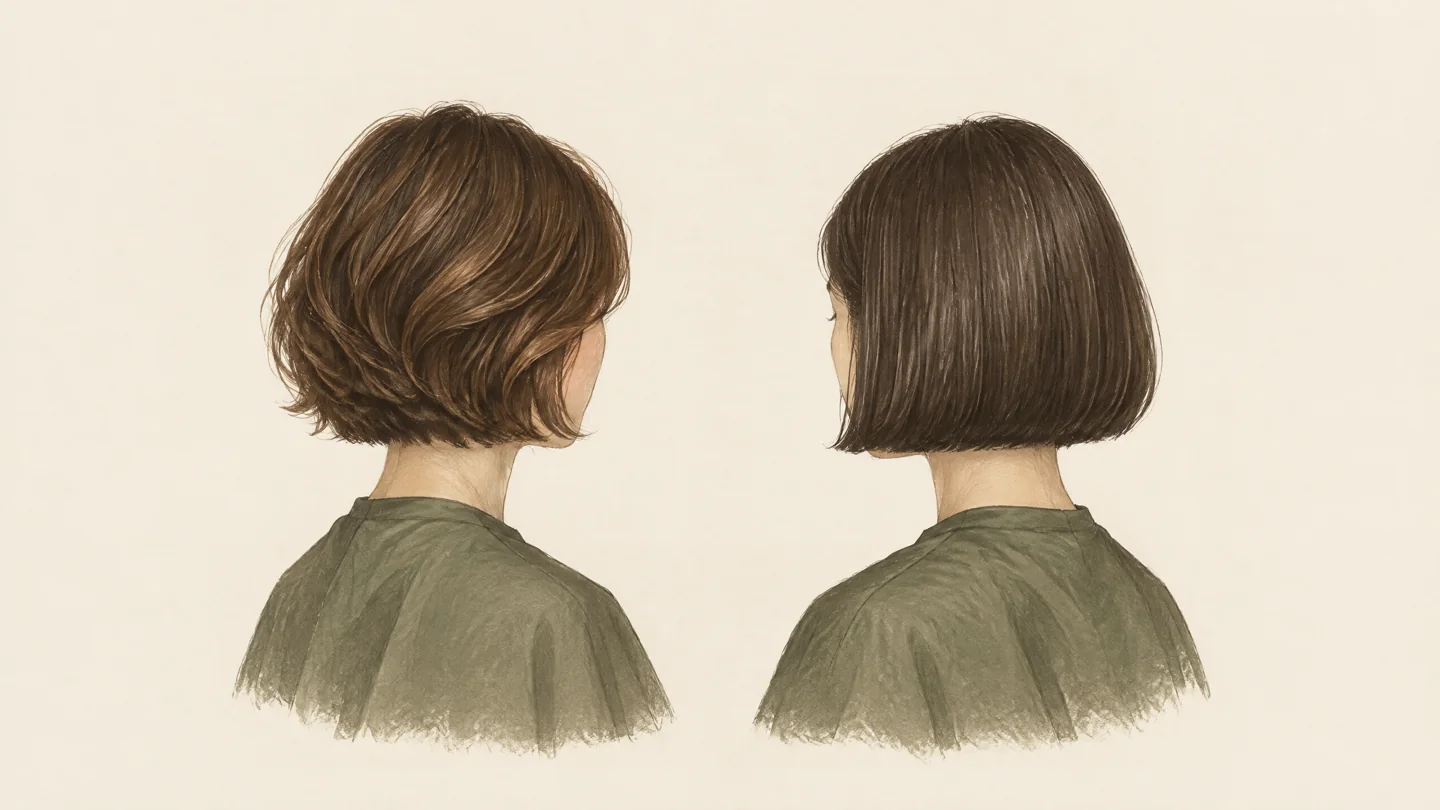
A bob is not one fixed haircut. A strong, one-length edge can make the shape feel crisp and intentional, while layers can shift the same length toward softness and movement. The better choice is usually the one that suits how you want your hair to sit on an ordinary day—not only how it looks in a polished inspiration photo.
Start with the outline you are drawn to, then consider your natural texture, density, preferred length and styling routine. Those details help turn “layered” or “blunt” from a trend label into a haircut plan that makes sense for you.
What changes when a bob is layered?
A blunt bob keeps most or all of its length at the perimeter. That more solid baseline creates a clean outline, whether it is worn sleek, softly bent or with texture. The eye is drawn to the line at the ends, so the shape can feel graphic and polished even when the hair is simply styled.
A layered bob has shorter pieces placed through the interior or around the face. Those pieces can release some weight, change how the hair moves and break up the outline. Layers do not need to be obvious or choppy. They can be long and subtle, with enough weight left at the bottom to keep the bob feeling full.
The choice is not always all or nothing. You may like the clean presence of a blunt perimeter but want a little softness near the face. Or you may want more visible movement without losing the sense of a bob. A haircut consultation is where the amount and placement of layering can be matched to the shape you want.
How much length do you want to keep?
Before choosing layers, decide where the bob needs to land in your life. A jaw- or chin-length bob makes a very different statement from a longer bob near the collarbone. Think about whether you want to tuck it behind your ears, keep enough length to pull some of it back, wear it under a helmet, or keep it off your face during a busy day. None of these needs automatically rule out a bob, but they affect the most practical length.
It also helps to notice the shortest point in an inspiration photo. Two photos can look similar from the front while one has a much shorter nape, longer front corners or more face-framing pieces. If you are growing out a previous cut, say which areas you would rather preserve and which ones you are ready to shorten.
Bring a photo that shows the length you like, but look beyond the pose. Is the hair tucked behind an ear? Is the model’s head tilted? Is a deep side part hiding the actual perimeter? These small details make a big difference in how the length reads.
Density, texture and the fuller-looking outline
Density and texture can change the balance of the same cut. If you want the ends to look more compact or substantial, retaining weight in the baseline may be part of the conversation. A blunt outline can create that fuller-looking effect because more hair reaches the same edge. It is one reason some people are drawn to a one-length bob.
That does not mean layers are off limits for finer hair, or that a blunt bob is the right answer for every dense head of hair. A few well-placed, longer layers may add movement while keeping the perimeter present. With dense hair, layering may help redistribute bulk so the shape does not feel heavy or triangular. The right balance depends on how your hair falls, where it has volume and how much of that volume you want to keep.
Your natural texture matters just as much. Waves and curls can make layers appear shorter or more pronounced once dry. Straighter hair tends to show a blunt edge and individual layer lines more clearly. If you normally air-dry, say so; if you routinely use a brush, hot tool or diffuser, say that too. The same cut can look very different when it is sleek, softly waved or left to follow its natural pattern.
The cut and the finish work together
Editorial bob photos often show a precise finish as well as a haircut: a smooth blowout, a deliberate bend through the mid-lengths, or a polished wave. A layered bob may look especially lively when the texture is encouraged, while a blunt bob can look sharper when the perimeter is smoothed. Both can be worn in more than one way, but neither guarantees the exact finish in a photo without considering your texture and the styling you enjoy doing.
Rather than asking whether a bob is “low maintenance,” ask a more useful question: what do you want it to look like on the days you do very little? Then compare that answer with the styling shown in your inspiration images.
The waterfall bob: the cut versus the finish
The waterfall bob is a newer name for a soft, movement-focused bob. It is associated with blended layers that flow into one another, often paired with relaxed S-shaped bends rather than a sharply straight edge. The effect is polished but not overly structured.
It is helpful to separate the haircut from the finished photo. Soft layering can support movement, but the visible wave is part of the look too. Hair with a natural wave may arrive there differently than very straight hair, which may need styling to create that bend. The amount of layering should also be tailored: too much can leave the ends feeling lighter than you want, while minimal layers can keep more fullness through the base.
Think of “waterfall bob” as a visual direction, not a promise of one technique or a universally easy routine. If that is the look you love, point out what appeals to you most: the length, the airy movement, the face-framing pieces or the soft wave. That gives Kim a better starting point for translating the idea to your hair.
Your next bob: photos and questions to bring
A useful inspiration set shows more than one angle and more than one styling mood. Include a photo of your current hair in natural light if you can, plus a few examples of the finished shape you like. It is also worth including one image that shows what you do not want, such as a very stacked back, a sharply angled front or short layers around the crown.
- Where do you want the shortest pieces to fall when your hair is dry?
- Do you prefer a strong, fuller-looking perimeter or more visible movement through the shape?
- How do you usually wear your hair: air-dried, smooth, waved, tucked back or partially pinned up?
- Which practical needs matter most, such as keeping length around the face or being able to pull part of it back?
- Are you hoping to grow out an existing bob, reset an uneven shape or make a bigger length change?
A bob is part of a haircut appointment, where shampoo, cut and blowout are included. You can also browse the Services guide for a quick overview of bob and lob styles; this conversation is where the outline and layers become personal to your hair.
Considering a bob near UTC Mall and UCSD? Contact Kim with your current-hair photos and inspiration so you can talk through the right length and level of layering before choosing your haircut appointment.