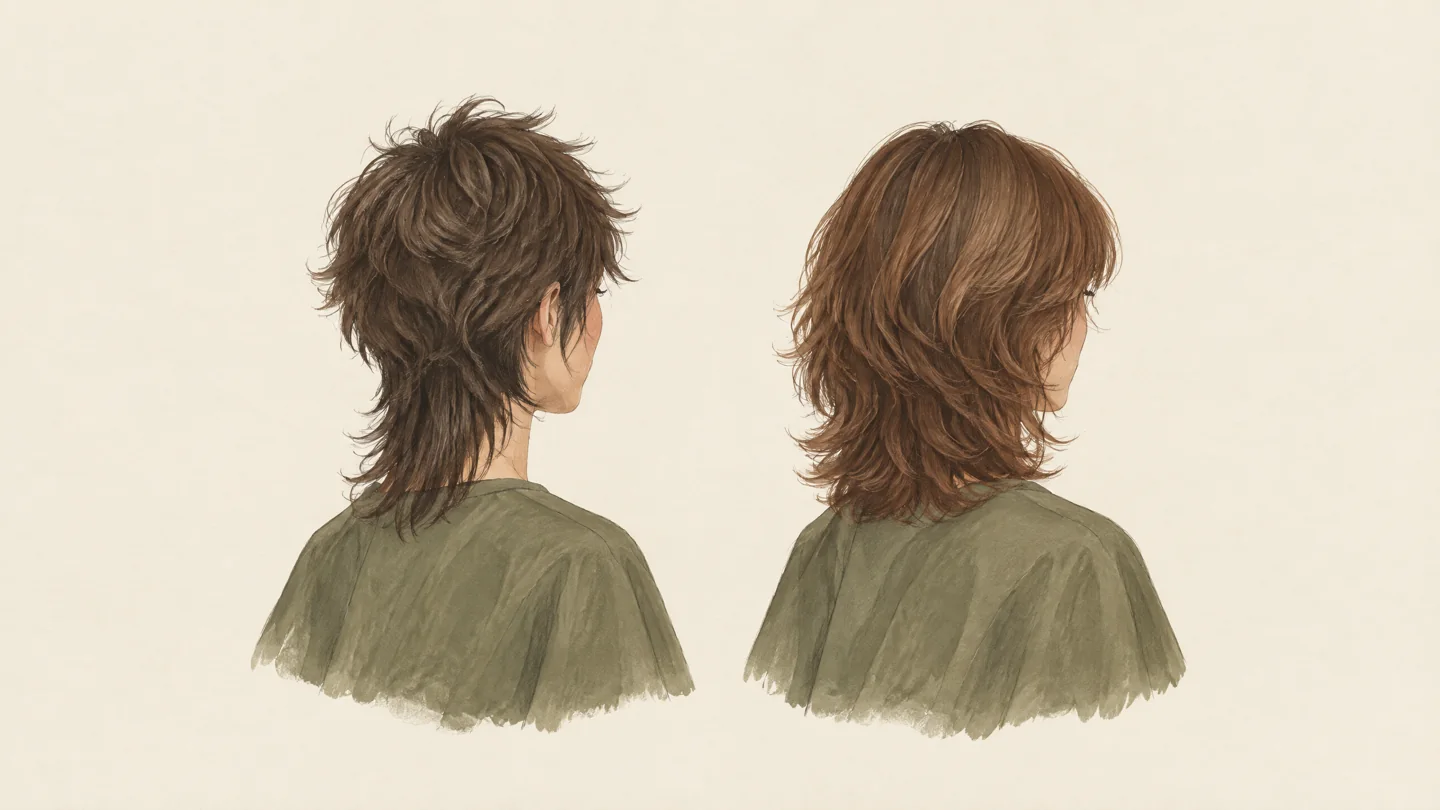
Wolf cuts and shags both bring movement to layered hair, but they do not create the same overall feeling. A wolf cut usually has more contrast between shorter layers around the crown and longer lengths below. A shag can be just as textured, yet its layers often feel more connected and adaptable.
Short answer: choose a wolf cut when you want a bolder crown, more visible separation between short and long pieces, and a deliberately undone shape. Consider a shag when you want texture and face framing but would rather keep the outline softer or adjust how dramatic the layers feel. Your natural texture, density, length and morning routine matter as much as the name of the cut.
Wolf cut and shag: the difference beyond the name
A wolf cut leans into contrast. The crown and upper layers are often shorter, creating lift and a more pronounced top-heavy shape before the hair tapers into longer pieces. It can feel a little more directional from the front and side, especially when the reference photo includes a fringe or shorter pieces around the face.
A shag is less about one fixed silhouette and more about layered movement. It may have crown layers and face framing, too, but the transition through the mid-lengths can be softer. One person’s shag may be light and long; another may want a much more textured version. That range makes the conversation about the shape you want more useful than the label alone.
Start with the overall effect you want
- Choose a wolf cut direction if you like obvious crown volume, a choppier outline and a stronger difference between the top and the lengths.
- Choose a shag direction if you want layers and texture while keeping the shape more blended, softer or easier to tailor in intensity.
- Bring both ideas if you like the face framing of one photo and the length of another. Those details can help define a personal version of either cut.
A fringe is optional, not a requirement for either look. If you are considering one, your part, growth patterns and willingness to style it are worth discussing before it becomes part of the plan.
Length, density and texture change the result
The more length you have, the more room there is to show a clear relationship between short layers and longer ends. On chin- to shoulder-length hair, a wolf cut can still have texture and lift, but the contrast may be less dramatic than it is on longer hair. If keeping enough length for a ponytail or another everyday style matters to you, say so early.
Density changes how layers read. On hair that feels very dense, well-placed layers can shift weight and create movement. On finer or lower-density hair, taking too much from the ends or crown may leave less of the fullness you want. The goal is not to follow a rule about “fine hair” or “thick hair”; it is to decide where you want shape, movement and a fuller-looking outline.
Natural texture matters, too. Waves and curls can make layers appear shorter once they spring into their usual pattern, while straighter hair may show every change in the cut’s outline more clearly. Share how you normally wear your hair rather than assuming an inspiration photo will translate exactly. A photo shows one person’s hair type, density, styling and camera angle—not a guaranteed result on every head of hair.
Air-drying versus a styled finish
Think about the version of the haircut you want to live with most often. If you usually air-dry, show Kim a current photo of your natural texture and describe what happens around the crown, face and ends as it dries. A layered cut may look especially lively in natural wave, but it can also need a small amount of styling or product for the definition you prefer.
If you enjoy a styled finish, a blow-dry can emphasize root lift, turn the face-framing pieces, or smooth and separate the layers. That does not mean you need to style the cut the same way every day. It simply helps identify whether you love the cut itself or the combination of the cut and a particular finish.
A Haircut appointment includes a shampoo, cut and blowout. Let Kim know whether you want to see a soft, polished finish or more texture and movement at the end of the appointment. The Services guide can also help you compare the style language before you reach out.
What to expect as layers grow out
Every layered cut changes as the shortest pieces catch up to the lengths. With a wolf cut, the stronger crown-to-length contrast can gradually look softer as it grows. With a shag, the layers may begin to read less defined or shift where the movement sits. How that feels depends on your starting length, texture and how much contrast was built into the original cut.
If your goal is to grow your hair, say that before the cut rather than waiting until the final shape is being decided. It is also helpful to mention whether you want to keep a fringe, protect the length around your face, or avoid a big change at the crown. A good plan can favor the features you enjoy now while leaving room for how you want the cut to evolve.
What to send Kim before choosing your appointment
For a layered haircut near UTC Mall and UCSD, a little context makes it easier to talk through the right direction. A current-hair photo and one or two inspiration images are more useful when you explain what you like in each one.
- Send photos of your hair as you wear it most often, including its natural texture when that is important to the plan.
- Point out the exact detail you like in each reference: the crown volume, fringe, face framing, retained length or texture.
- Share what you do not want to lose, such as length, the ability to tuck hair back, or a softer perimeter.
- Describe how much time you usually want to spend styling and whether you mostly air-dry or use heat.
- Mention any parting, cowlick or past cut that affected how your layers sat.
Have a wolf cut or shag in mind? Contact Kim about the shape you love, and share photos of your current hair and inspiration by text so you can talk through the right haircut appointment.